Fever in Children: When to Worry and When to Call
A fever in children is a temperature of 100.4°F (38°C) or higher, and most fevers are a sign the body is fighting an infection, not a danger on their own. Worry less about the number and more about how your child looks and acts, and call us right away for any fever in a baby under 3 months.
What temperature counts as a fever?
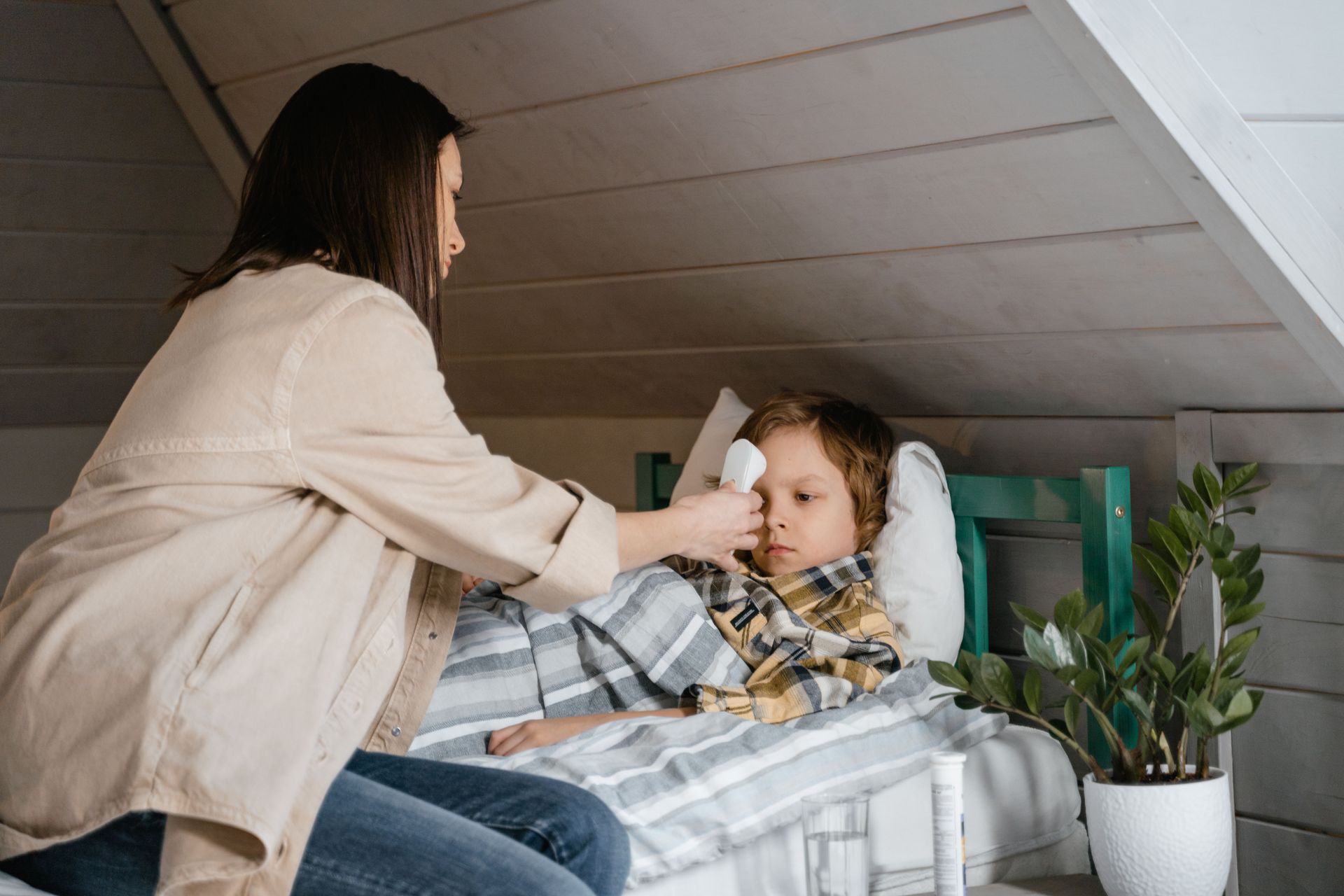
A fever is a temperature of 100.4°F (38°C) or higher. How you measure it matters:
- Under 3 months: a rectal temperature is the most accurate
- 3 months to 4 years: rectal or armpit readings work; armpit readings can run a bit low
- 4 years and older: an oral thermometer is fine once your child can hold it under the tongue
- Forehead and ear thermometers are handy for quick checks, but confirm a borderline reading another way
Feeling your child's forehead can tell you they feel warm, but it cannot tell you whether they have a fever.
Is a fever bad for my child?
Usually not. Fever is one of the body's defenses. Raising the body's temperature helps the immune system work faster and makes it harder for many viruses and bacteria to multiply.
Most fevers in children come from common viral infections and go away on their own in two to three days. A higher number does not always mean a more serious illness. A child with a 103°F fever who is drinking and playing is often less worrying than a child with a 101°F fever who is limp and hard to wake.
Fevers from infection do not cause brain damage. Some young children have a brief febrile seizure when a fever rises quickly. These are frightening but usually harmless. Still, any seizure needs emergency care, so call 911.
How can I keep my child comfortable with a fever?
The goal of fever care is comfort, not a normal number on the thermometer.
- Offer plenty of fluids, like water, breast milk, formula, or ice pops
- Dress your child in light clothing and use a light blanket
- Let them rest, but there is no need to wake a sleeping child to give medicine
- Keep the room at a comfortable temperature
- Skip cold baths and rubbing alcohol; they can cause shivering and discomfort
If your child is uncomfortable, fever-reducing medicine can help them feel better, drink, and sleep.
How much fever medicine should I give?
Dosing for acetaminophen (Tylenol) and ibuprofen (Motrin, Advil) is based on your child's weight, not just their age. Products come in different strengths, so the right amount depends on which one you have.
- Check our Medicine Dosages page for weight-based charts
- Always use the dosing tool that comes with the medicine, not a kitchen spoon
- Do not give ibuprofen to babies under 6 months unless we tell you to
- Never give aspirin to children or teens
- Do not give any fever medicine to a baby under 3 months before calling us
If you are unsure of the right dose, call us at 215-545-8188. Our nurses can confirm it with you, day or night.
When should I call the pediatrician about a fever?
Call us right away if:
- Your baby is under 3 months old and has a temperature of 100.4°F (38°C) or higher, even if they seem fine
- Your child has a fever of 104°F (40°C) or higher
- Your child has a weak immune system or a serious medical condition
- Your child seems very sick, very fussy, or will not drink
Call us during office hours if:
- The fever lasts more than 24 hours in a child under 2, or more than 3 days in a child 2 or older
- The fever went away for a day and then came back
- Your child has ear pain, a sore throat, pain when peeing, or a new rash with the fever
- You are worried, or your gut tells you something is wrong
We make every effort to see sick children the same day you call. Learn more about our sick visits. After hours, call 215-545-8188 and you will reach our triage nurses, with a physician always on call for backup.
When should I go to the ER or call 911?
Call 911 for any life-threatening emergency, such as loss of consciousness, a seizure, or severe trouble breathing. Go to the emergency room or call 911 if your child has a fever and:
- Is struggling to breathe, or has blue or gray lips
- Is very hard to wake up, or is limp and unresponsive
- Has a stiff neck or a severe headache with confusion
- Has a purple or red rash that does not fade when you press on it
- Shows signs of dehydration, such as no urine in 8 or more hours, no tears, or a very dry mouth
- Cannot stop crying and cannot be comforted
If you are not sure whether it is an emergency, call us first. Our nurses are available around the clock. See our Emergencies page for more.
Frequently asked questions
What is a normal temperature for a child?
Normal body temperature ranges from about 97°F to 99°F and can change through the day. A reading of 100.4°F or higher is a fever.
Can teething cause a high fever?
Teething may cause a slight rise in temperature, but it does not cause a true fever of 100.4°F or higher. Look for another cause.
Should I alternate Tylenol and Motrin?
Ask us before alternating. Switching between medicines can lead to dosing mistakes. Most children do well with one medicine at the right weight-based dose.
Can my child go to school or day care with a fever?
Keep your child home until they have been fever-free for 24 hours without fever-reducing medicine.
Can I check my child's symptoms online?
Yes. Our Is Your Child Sick?® tool walks you through common symptoms and next steps. It does not replace a call or a visit.
Key takeaways for families
A fever of 100.4°F or higher is usually the body fighting infection. Focus on comfort, fluids, and how your child acts. Give fever medicine by weight, and ask us if you are unsure of the dose. Call right away for any fever in a baby under 3 months, and go to the ER or call 911 for trouble breathing, seizures, or a child who is hard to wake. Advocare Society Hill Pediatrics serves families in Philadelphia, PA, with same-day sick visits and nurses available 24/7. To have your child seen, call 215-545-8188 or book your appointment online.